
Διαβάστε το άρθρο στα ελληνικά.
Buying Greek property without reading Greek: the interpreter, the πληρεξούσιο and the papers you sign
On this page
What άρθρο 10 ν. 2830/2000 actually requires when a buyer does not speak Greek, how a πληρεξούσιο is granted from abroad with an Apostille, who may produce a translation a Greek office accepts, and what each document in a purchase commits you to.
This guide is a preliminary screen for a cost or timing question, not legal, surveying, engineering or tax advice; read the full scope and limits before relying on it.
The deed that transfers a Greek plot is written in Greek and read out before it is signed. Where the notary judges that a party does not follow Greek, a sworn interpreter is engaged to render the deed aloud in that party’s own language, and a deed drawn without one in that situation is void. The judgement belongs to the notary, so the protection is real without being automatic, and confirming it in advance takes one phone call.
What follows is procedure and paperwork rather than land: the documents you will put your name to, what each one commits you to, and the two or three places where not reading Greek turns from an inconvenience into a legal exposure. It sits alongside the pre-offer checklist, which covers what to check about the land itself.
The provision that decides all of this
Three articles of the Κώδικας Συμβολαιογράφων, ν. 2830/2000 (ΦΕΚ Α΄ 96/16.3.2000), do the work. Άρθρο 11 παρ. 1 requires the deed to be written legibly in Greek, with the figures that carry a critical date or other material term also written out in words. Άρθρο 11 παρ. 4 requires it to be read to the people appearing before it is signed by them and by the notary, with a signature on every sheet.
Then άρθρο 10 παρ. 1:
Αν κάποιος από τους δικαιοπρακτούντες ή τους αντιπροσώπους τους αγνοεί, κατά
την κρίση του συμβολαιογράφου, την ελληνική γλώσσα, προσλαμβάνεται διερμηνέας για μετάφραση
γενικά των δηλώσεών του από την ξένη γλώσσα στην ελληνική και το αντίθετο, καθώς και του
περιεχομένου του συμβολαίου από την ελληνική στην ξένη γλώσσα. Ο διερμηνέας ορκίζεται ενώπιον του
συμβολαιογράφου, σύμφωνα με τις σχετικές διατάξεις του Κώδικα Πολιτικής Δικονομίας, ότι θα ασκήσει
πιστά τα καθήκοντά του.
Four things are settled by that sentence. The trigger is the notary’s own judgement, «κατά την κρίση του συμβολαιογράφου», so it is not a box you tick. The interpreter’s job covers both your statements and the content of the deed, rendered from Greek into your language. The oath is taken in front of the notary, under the Code of Civil Procedure. And where the language is very little known, the Code allows an interpreter for the interpreter.
Άρθρο 10 παρ. 4 makes the interpreter countersign the deed, so their name is on the paper you will hold for as long as you own the land. Άρθρο 10 παρ. 5 is one line: «Η μη τήρηση των ανωτέρω διατάξεων επιφέρει ακυρότητα του εγγράφου». Nullity of the document, not a fine.
The omissions matter too. The Code does not require a written translation of the deed to be drawn up or attached; the statutory protection is oral interpretation at the reading. And άρθρο 9 παρ. 1 makes a second notary or two witnesses obligatory only where somebody present cannot sign, so a foreign buyer does not automatically bring witnesses into the room. Where the notary does call for witnesses, άρθρο 9 παρ. 3 requires them to know Greek, be over 18 and be able to sign.
The Code does let the notary translate, and the limit is exact. Άρθρο 1 παρ. 2 allows a notary to translate into Greek, on their own responsibility, documents drawn in a foreign language and useful for drawing up the act. The permission runs one way, and we found nothing in the Code authorising the reverse. Neither did we find an express prohibition, so the honest statement is this: nobody has shown us the provision on which an official English συμβόλαιο could rest. Until somebody does, treat an English text handed over by a notary’s office as a courtesy translation, and rely on the interpreter, whose role the statute does define.
What the deed says about you
Three provisions of άρθρο 8 govern how a foreign buyer appears on the page. Παρ. 6 requires names and place names given in a foreign language to be written in Greek characters first and then in the foreign language in Latin characters, so your name is on the deed twice. Παρ. 3 says that where somebody acts through a representative, the identity details are written as they stand in the power of attorney. Παρ. 4 requires the documents proving that authority to be named in the deed and attached to it.
Read those three together and you get the commonest defect in a foreign purchase, and it has nothing to do with the land. A passport spells the name one way, the ΑΦΜ record another, the πληρεξούσιο a third, and the deed inherits whichever the notary was handed. Nobody notices, because nobody in the room reads all three scripts against each other. It surfaces years later, at a resale or an inheritance, when the cadastral entry and the identity document do not match.
How a wrong name gets corrected, and in which office
The cadastral half has a cheap route and an expensive one, and which one you get depends on how the error looks on the page. Άρθρο 18 παρ. 1 ν. 2664/1998 lets the Προϊστάμενος of the κτηματολογικό γραφείο correct a πρόδηλο σφάλμα in a cadastral entry, on the application of anyone with a legal interest or of his own motion, and the first example the provision gives is the wrong recording of details taken from an identity document. A misspelled surname is that example. The αίτηση goes to the κτηματολογικό γραφείο holding the sheet, with the passport, the deed and the πληρεξούσιο attached so the clerk can see which of them the sheet followed. If the Προϊστάμενος has not ruled within two months, the applicant may take it to the Κτηματολογικός Δικαστής, and has fifteen days from the end of that two-month period in which to do so.
Where the entry is substantively wrong, not merely obvious on its face, for example the wrong person where only a letter is wrong, the route is άρθρο 13 παρ. 2 of the same law: an αγωγή by anyone with a legal interest, against the person shown as holder, which must be recorded on the κτηματολογικό φύλλο within thirty days of filing or its hearing is inadmissible, and the entry falls only to an irrevocable judgment. The distance between the two routes is a counter clerk against three years of litigation, which is the argument for reading the registration certificate the week it arrives instead of on the next summer visit.
The tax side is a different office and a different form, and neither register corrects the other. Your name in the ΑΑΔΕ tax register is changed by a δήλωση μεταβολών under άρθρο 11 ν. 5104/2024, filed with the tax administration; the article sets thirty days from the change, and excepts a natural person’s changes unconnected with business activity from that deadline, so the filing is owed and the thirty days are not. We read that article in a legal database and not on the gazette sheet, and we still cannot confirm which office takes it from someone with no Greek address. Do both in the same week. A corrected cadastral sheet sitting above a stale ΑΦΜ record reproduces the same mismatch at the next transaction.
Πληρεξούσιο: signing from where you live
Most foreign buyers never sit in the notary’s office. A πληρεξούσιο (plirexoúsio, power of attorney) lets a named person, normally your own lawyer, appear and sign for you. The form it must take comes from άρθρο 217 ΑΚ, which says the declaration granting authority takes the form required for the transaction it concerns unless something else follows. A land purchase must be made before a notary under άρθρο 369 ΑΚ, so the power of attorney is notarial too.
If you hold a non-EU passport there is a check at the counter that catches people out. Under άρθρο 22 παρ. 1 ν. 5038/2023 (ΦΕΚ Α΄ 81/1.4.2023), when a third-country national is a party to a notarial act and appears in person, or declares residence or an address in Greece, the notary must establish that they hold an entry visa or a residence permit and must record that in the deed. Παρ. 2 exempts powers of attorney given to lawyers to appear before judicial and administrative authorities, which a purchase deed is not. What a lapsed permit actually costs is a timetable rather than the property: the notary cannot complete the act with you standing there, the appointment goes, and everything keyed to it moves with it: the transfer-tax declaration, whose copy the notary cannot use more than three months after issue, the seller’s certificates and their own expiry dates, the interpreter’s diary.
Signing through a πληρεξούσιο takes you away from that counter. Be exact about what that does. It does not regularise a stay. The check bites on the person appearing, and παρ. 1 also reaches a party who declares an address in Greece, so a representative is no way round a status problem. What it does is keep the purchase moving while your own paperwork is in flux, which is the ordinary arrangement anyway for a buyer who lives somewhere else. If your visa or permit is anywhere near its expiry, say so to your lawyer in week one rather than in week ten.
The other failure mode is a power of attorney drafted wide enough to be convenient. A specific one names the ΚΑΕΚ, sets a maximum price, names the account the money leaves from, carries an expiry date, and grants no power to sell, mortgage, borrow against or lease the property afterwards. Ask for the draft in Greek and in your own language before it is signed, and count those five things.
Who may produce a translation a Greek office will take
The Ministry of Foreign Affairs stopped serving the public at its own translation counter on 1 September 2021, the day the register went live. Official translation now runs through the Μητρώο Πιστοποιημένων Μεταφραστών, the register of certified translators established under ν. 4781/2021 (ΦΕΚ Α΄ 31/28.2.2021), ΥΠΟΚΕΦΑΛΑΙΟ Ζ΄, with the register itself constituted by the ministerial decision at ΦΕΚ Β΄ 3149/19.7.2021. Certified translators work as self-employed professionals, they translate in both directions, and the service publishes a public search so you can confirm the person your lawyer used is on it.
The register’s own page sets out the chain a foreign document has to arrive through, and it is the part buyers get wrong. A foreign public document from a state party to the Hague Convention is translated officially once it carries the Apostille. Where the Convention does not apply, or where Greece has entered a reservation about a state’s accession and the reservation stands, the document is authenticated by the Greek consular authority in the country of origin, or by that country’s consular authority in Greece with certification by the competent department of Κ.Ε.Π.Π.Α.Ε.
Private documents follow a different rule. An official translation of a private document is made only where the document itself carries authentication or a visa stamp. A certified translator may translate an unauthenticated, unsigned or machine-produced private paper, and the service states plainly that the result is not an official translation. So a translated “reservation agreement” arriving on an agent’s letterhead is a reading aid and nothing more, whoever typed it.
The price has a legal floor. Check it when a quote arrives with no breakdown. The ΚΥΑ at ΦΕΚ Β΄ 3903/23.8.2021 (αριθμ. 092.1/ΑΣ 4151) sets a minimum lawful fee per page of translation, keyed to the four document categories of άρθρο 148 παρ. 1 ν. 4781/2021: 5,00 € for category Α΄, 6,00 € for Β΄, 10,00 € for Γ΄ and 11,00 € for Δ΄. A page is at least 270 words; a standalone one-page document counts as a full page above 100 words and as half a page at 100 words or fewer. Category Α΄ holds passports and the Apostille certificate itself. Category Γ΄ holds «δικαστικές αποφάσεις, πρακτικά δικαστηρίων, πληρεξούσια», so a power of attorney has a floor of 10,00 € a page and a two-page one is a twenty-euro job at that floor. These are minima rather than a tariff, and going below them is a disciplinary offence for the translator under άρθρο 148 παρ. 3β of the same law. What the figures give you is the shape of an honest invoice: anything several multiples above the floor is charging for handling, courier and turnaround, all of which are fair to charge for and fair to itemise.
Partly verified: the 1 September 2021 changeover is stated consistently by the translators’ own bodies and by law firms writing at the time, and we did not open the instrument that fixes that date, so we cite none. The register, its law, its ΦΕΚ numbers and the fee decision were read directly on 1 August 2026.
ΑΦΜ, and what a tax representative actually carries
You will not complete without a Greek tax number, and the provision that says so is not where a reader would go looking. Άρθρο 8 παρ. 1 ν. 2830/2000, the list of what a notarial deed must contain, runs through the date and place, the notary, and then each party’s name, parents’ names, occupation, place and year of birth and residence. It does not name the ΑΦΜ at all. What does the work is the tax return. Άρθρο 13 του α.ν. 1521/1950, ratified by ν. 1587/1950, stops the notary drawing a transfer deed unless the φόρος μεταβίβασης declaration is attached, and bars them from using a copy of it more than three months old; that declaration is filed under an ΑΦΜ. Άρθρο 10 ν. 5104/2024 (ΦΕΚ Α΄ 58/19.4.2024), the Code of Tax Procedure, then requires anyone about to become liable to pay or withhold tax, or to file any return under the Code, to register in the tax register, and assigns a unique number on registration. Neither article says in terms that you need an ΑΦΜ to buy property, and the costs page reaches the same gap from the tax side. The chain above is what your lawyer acts on, and in practice the same lawyer obtains the number under the same πληρεξούσιο.
Άρθρο 8 παρ. 1 is where the confusion sits. A taxpayer who is tax-resident abroad may appoint a natural or legal person resident in Greece as a φορολογικός εκπρόσωπος, for the purpose of complying with the formal obligations arising from the Code, and all correspondence about the taxpayer is sent to that person. The verb is δύναται, may: the Code offers the appointment and does not impose it. And παρ. 3 says what half the English-language advice on this gets backwards:
Το πρόσωπο που ορίζεται φορολογικός εκπρόσωπος δεν ευθύνεται για την εκπλήρωση
ή μη των φορολογικών υποχρεώσεων του φορολογούμενου.
The representative is not liable for whether your tax gets paid. What they hold is the address every notice goes to, which is a real exposure of a different kind: an ΕΝΦΙΑ assessment or a correction notice lands with them, and if they have moved on, stopped answering or fallen out with you, it still counts as served. Appoint someone you will still be able to reach in five years, and put the appointment in writing with an end date.
Unverified: which tax office issues the number to a person with no Greek address. Both aade.gr and gov.gr returned HTTP 403 to our requests on 1 August 2026, so we are not naming a counter. The statutory basis above is what your lawyer will act on, and the ΑΦΜ is routinely obtained by the same lawyer under the same πληρεξούσιο.
The documents you sign, one by one
Each row below is a separate legal event. The rightmost column is not a summary of the document; it is the clause a reader working through a translation most often misreads.
| Document | What it does | Have translated before you sign |
|---|---|---|
| Προσύμφωνο (prosýmfono) | Preliminary contract. Under άρθρο 166 ΑΚ it takes the form the law requires for the contract to be concluded, and a land sale must be made before a notary under άρθρο 369 ΑΚ. So a valid προσύμφωνο is notarial. | The whole of it, and the deadline clause first. A private “reservation agreement” signed in an agent’s office is not a προσύμφωνο: under άρθρο 159 ΑΚ a transaction for which the statutory form was not observed is void, so neither side can be held to it. |
| Αρραβώνας (arravónas) | Άρθρο 402 ΑΚ: a sum given at the conclusion of a contract is taken, unless agreed otherwise, as covering the loss from non-performance. Άρθρο 403 ΑΚ: the party at fault loses what they gave, or returns double what they received. | The one word that says whether the sum is an αρραβώνας or a προκαταβολή. A προκαταβολή is credited against the price on completion and, if the sale never happens, is simply returned: άρθρο 403 reaches only the αρραβώνας, so there is no forfeit and no doubling. |
| Ποινική ρήτρα (poinikí rítra) | Άρθρα 404–405 ΑΚ: an agreed penalty, which falls due if the debtor is at fault in failing to perform or falls into default, and which falls due even where the creditor has suffered no loss at all. | The trigger and the amount. A penalty clause attached to a date you cannot control, such as the seller’s certificates arriving, is the one to argue about. |
| Τοπογραφικό διάγραμμα (topografikó diágramma) | The surveyed sheet attached to the deed. Since 8 June 2026 the operative provision is άρθρο 283 παρ. 1 ν. 5306/2026 (formerly άρθρο 5 παρ. 1 ν. 651/1977, as amended by άρθρο 16 ν. 5293/2026): side lengths, boundaries, the names of known adjacent owners, the area, and the engineer’s responsible declaration on buildability. See τοπογραφικό διάγραμμα. | The declaration block rather than the drawing. The drawing needs no translation; the sentence saying whether building is permitted does. If somebody tells you the diagram is no longer required, the exemption is narrow: a working cadastre, a ratified and registered πράξη εφαρμογής, and a deed that does not move the boundaries. All three, or the sheet is still owed. |
| Βεβαίωση μηχανικού (vevaíosi michanikoú) | Άρθρο 368 παρ. 1 ν. 5306/2026 (formerly άρθρο 83 παρ. 1 ν. 4495/2017): every deed transferring a right in rem, land with no building included, carries an owner’s declaration and an engineer’s certificate on unauthorised construction. | Whether it says “no building” or “no unauthorised construction beyond the permitted limits”. Those are two different statements about two different plots. |
| Συμβόλαιο (symvólaio) | Άρθρο 1033 ΑΚ: transfer of ownership needs agreement in notarial form that ownership passes for a lawful cause, and that agreement is submitted for registration. | Nothing, if the interpreter does their job at the reading. Everything, if you want the draft three days earlier, which you should. |
| Μεταγραφή / καταχώριση (metagrafí / katachórisi) | Άρθρο 1198 ΑΚ: without it, ownership does not pass. In cadastral areas the equivalent is registration on the κτηματολογικό φύλλο under άρθρο 12 ν. 2664/1998. | The certificate that comes back afterwards. It is the only document proving you own anything, and it arrives after everyone has gone home. |
Ownership does not move on the day you sign. Between the signature and the registration there is a gap of days or weeks in which the seller is still the person the register shows, and άρθρο 13 παρ. 1 ν. 2664/1998 presumes what the register shows to be accurate. Ask your lawyer for the registration certificate as a deliverable with a date on it, chase it, and read the spelling of your own name on it against your passport while the πρόδηλο σφάλμα route above is still the cheapest way to fix it.
The independence problem, and how to test it
A buyer who reads Greek finds their own lawyer. A buyer who does not is introduced to one, and the introduction almost always comes from the person selling the property. The result is a chain of professionals whose relationships you cannot see, described to you in a language you cannot check.
Start with the notary, because the misunderstanding there is structural. Άρθρο 1 ν. 2830/2000 makes the notary an unpaid public officer whose function is to draw up and keep the instruments of transactions and declarations. That is a public duty owed to the act, and it is not advocacy for either side. A notary who speaks fluent English is easier to deal with and is not, by virtue of that fluency, looking after your interests. In many transactions the notary is chosen by the seller, which is lawful. The seller's choice does not make the notary your adviser.
The lawyer is where the real test is. Άρθρο 37 παρ. 1 ν. 4194/2013 obliges a lawyer to take on any case except one that is manifestly unfounded, is incapable of defence, conflicts with the interests of other clients, or offends their principles. Read it for what it is: a rule about accepting or declining instructions, and not a duty to hand you a client list. Nothing in the Code makes a lawyer volunteer who else they act for. What the provision does is make the question answerable and the answer consequential: a lawyer who takes your instructions while acting for the seller has accepted a case they were obliged to refuse. So put it in writing before you pay anything: have you acted, in the last two years, for this seller, this agent or this development. An independent lawyer answers in a line. A lawyer who will not answer has told you something too. Then check the name against the membership register of the local Δικηγορικός Σύλλογος, and the notary against the members’ register the Συμβολαιογραφικός Σύλλογος publishes.
One more check costs nothing. Άρθρο 36 παρ. 2α ν. 4194/2013 makes searching the books of the υποθηκοφυλακεία and the κτηματολογικά γραφεία, and drawing up the title-check report, lawyers’ work, and adds that requesting and obtaining certificates and copies needs no lawyer at all. So you can pull your own ΚΑΕΚ extract and compare the parcel number, the area and the registered holder against what the report you paid for says. Two of those three are numbers.
The bank side, and the trail you will need later
A Greek account is not legally required to buy, and it is required in practice for everything that follows: ΕΝΦΙΑ, ΤΑΠ through the electricity bill, the ΔΕΔΔΗΕ connection, the water board. Opening one as a non-resident means proving where the money came from, and the documents an anti-money-laundering file wants are the same ones your own bank at home will need when the funds leave: employment or pension income, the sale of another property, an inheritance, a company distribution. Assemble that before the deposit rather than the week before completion.
Cash is not an option, at any amount, and this is the paragraph to read twice if somebody has told you otherwise in a language you cannot check. Άρθρο 3 ν. 5073/2023 (ΦΕΚ Α΄ 204/11.12.2023) added a παρ. 8 to άρθρο 20 ν. 3842/2010: on the drawing of notarial deeds transferring property for consideration, of προσύμφωνα and of discharge deeds, «η καταβολή του τιμήματος γίνεται αποκλειστικά με τη χρήση τραπεζικών μέσων πληρωμής». A notarial or private document recording a deposit or a part or whole payment of the price in cash, or not evidencing payment by a banking means, is αυτοδικαίως άκυρο: void of itself, barred from registration, and productive of no legal effect. There is no threshold. The old €500 rule for goods and services in the same άρθρο 20 is a different paragraph and a different subject.
Three consequences follow that a buyer can act on. The notary is required to write the method of payment into the deed, by the περ. ζ that the same law added to άρθρο 13 του α.ν. 1521/1950, so the sentence will be there to be read. The rule reaches the προσύμφωνο as well as the deed, which is precisely where a cash deposit is normally suggested. And the penalty is a fine of 10% of the sum not shown to have moved through a bank, no less than 10.000 € and no more than 500.000 €, a figure we take from the ΑΑΔΕ’s own circular Ε.2075/2024 rather than from the penal provision, which we did not open. The rule applies to transfers for consideration; the circular carves out payments and προσύμφωνα that predate 11 December 2023. Gifts and parental grants sit outside it. The costs page works the same rule from the money side.
For one class of purchase there is a second, stricter payment rule. Άρθρο 100 παρ. 5 ν. 5038/2023, the investor residence permit, requires the whole of the agreed price to be paid by crossed bank cheque into a payment account held at a credit institution operating in Greece, by credit transfer, or through a POS terminal operated by a payment services provider operating in Greece. A spouse, or a blood or marriage relative to the second degree, may make the payment. All the particulars of the payment, including the identification of seller, buyer and any third-party payer, the account numbers, the address and the identity document, are declared before the notary drawing the deed and written into it.
The thresholds in παρ. 2 of the same article are 800,000 euro for Attica, the regional unit of Thessaloniki, Mykonos and Thira and islands over 3,100 inhabitants; 400,000 euro for the rest of the country; and 250,000 euro where the main areas of the property are converted to residential use. A built property or one with a building permit needs at least 120 square metres of main areas. Those numbers change by legislation. Re-read them in the gazette before relying on them.
Keep the whole trail even where nothing obliges you to. The file you are building is the one a future buyer’s lawyer will ask to see: the transfer instructions, the bank’s confirmations, the receipts, and the sentence in the deed that says how the price moved.
How long it takes, and where it slips
Eight to twelve weeks is the ordinary range for a purchase from abroad when nothing goes wrong, and almost none of that time is the notary’s. It goes on documents crossing borders and on certificates the seller has to request from offices that owe them no deadline.
Start two steps on that chart before anyone tells you to. The πληρεξούσιο is the first, because its chain runs through three parties in two countries and a delay at any one of them stops the rest; a buyer who begins it in week one is never the reason the signing slips. The ΑΦΜ is the second, and it is usually obtained by the same lawyer under the same πληρεξούσιο, which is an argument for drafting the power of attorney wide enough to cover it and narrow enough to do nothing else. The step nobody can accelerate is the seller’s certificate file, so ask early which of them the seller already holds and which have to be applied for, and put the answer in writing before you agree to any penalty clause keyed to a signing date.
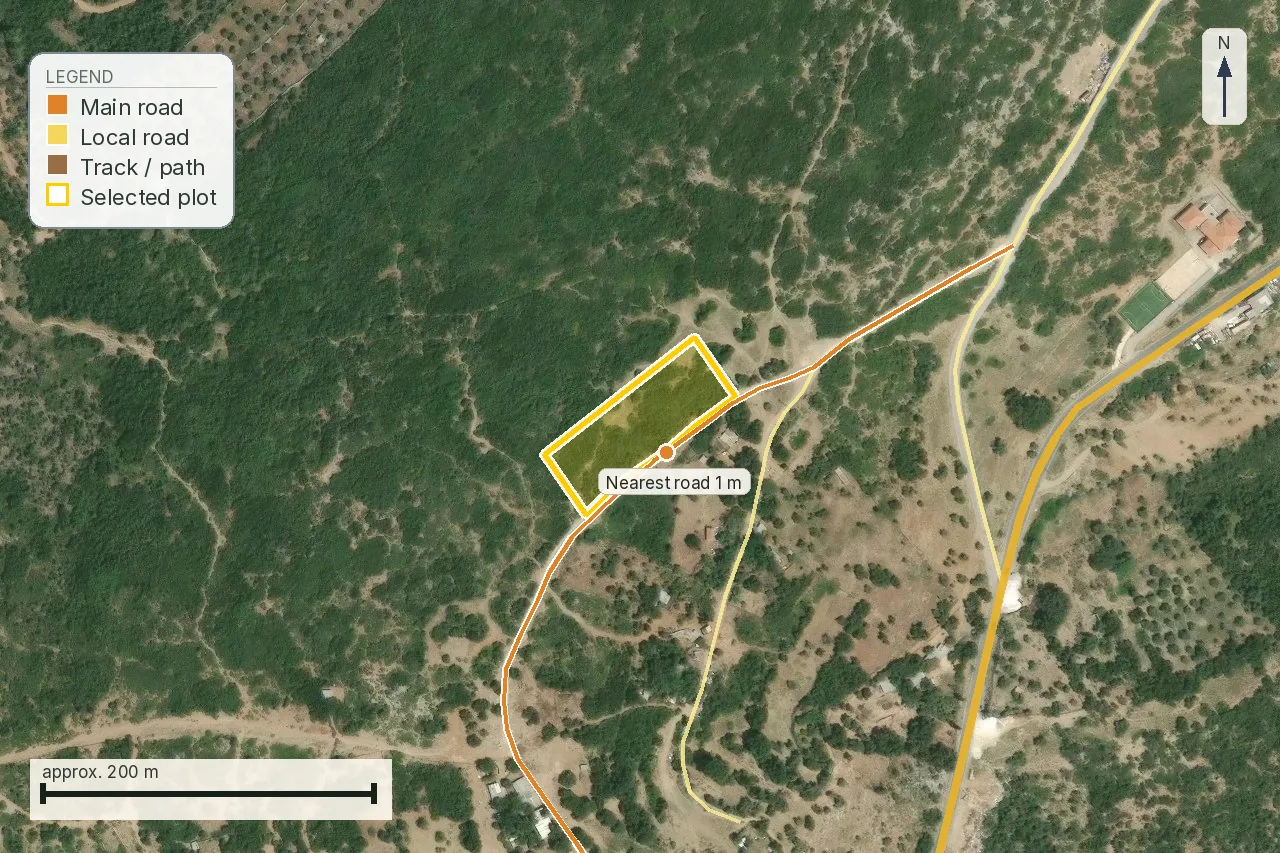
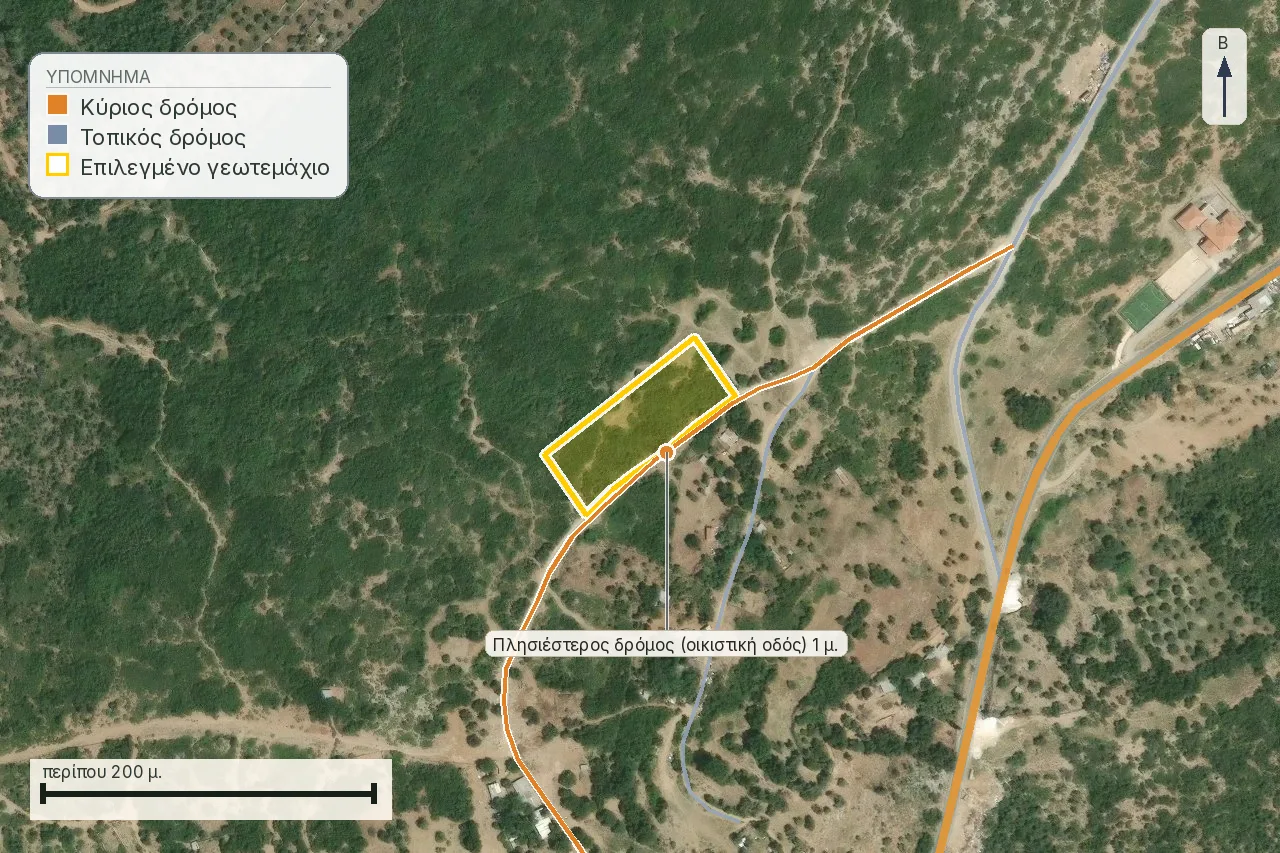
The same finding, in two languages
What to ask for, in order
- Get the ΑΦΜ started in week one, together with the πληρεξούσιο if you will not be attending. Notarised abroad, apostilled, translated by someone on the register. It is the step that adds a month when it is left until the seller is ready.
- Instruct your own lawyer in your own name, with an engagement letter and an invoice addressed to you, and put the conflict question in writing before you pay anything.
- Ask for the draft συμβόλαιο three working days before signature, in Greek, and have your lawyer read it to you against the table above.
- Confirm the interpreter with the notary’s office by name, in advance, and check that άρθρο 10 is recorded in the deed. Their signature belongs on the paper.
- Check your own name in both scripts on the deed, against the passport, the ΑΦΜ record and the πληρεξούσιο, before anyone signs anything.
- Pay everything through a bank, including the deposit and anything handed over at the προσύμφωνο stage. Άρθρο 20 παρ. 8 ν. 3842/2010 makes a document recording a cash payment void of itself, so a cash “convenience” destroys the paper it is written on.
- Treat the registration certificate as the deliverable, with a date, and keep the payment trail with it.
None of that requires Greek. It requires knowing that the ΚΑΕΚ, the area, the price and the holder are the same characters in every language; that the interpreter’s signature is the one the statute put on the page for you; and that a name spelled wrong on a cadastral sheet is a two-month application today and a lawsuit in three years.
Common questions
Does the contract have to be translated into English before I sign it?
No. Άρθρο 11 παρ. 1 ν. 2830/2000 requires the deed to be written in Greek, and άρθρο 10 παρ. 1 requires a sworn interpreter to render its content from Greek into your language at the reading. Nothing in the Code calls for a written translation to be drawn up or attached. Άρθρο 1 παρ. 2 lets a notary translate documents into Greek, and we found no provision letting one issue an official foreign-language version of a Greek deed, so treat any English text from the notary's office as a courtesy copy unless somebody shows you the provision behind it. Ask your own lawyer for a written summary of the draft three days earlier; that is a service you buy, and the law does not supply it.
What happens if no interpreter is used and I sign anyway?
Άρθρο 10 παρ. 5 ν. 2830/2000 says non-compliance brings nullity of the document. The nullity attaches to the deed itself; it is not a penalty on the notary. In practice it means a defect sitting in your chain of title that a future buyer's lawyer can find, so the damage arrives at resale rather than on the day. The interpreter also countersigns the deed under παρ. 4, so their absence is visible on the paper for as long as it exists.
Can my lawyer act as the interpreter as well?
The Code does not name a profession or a qualification for the interpreter; άρθρο 10 παρ. 1 requires only that they be engaged and sworn before the notary under the Code of Civil Procedure, and παρ. 4 that they countersign. It also does not extend the kinship disqualifications of άρθρο 7, which apply to the notary and, through άρθρο 9 παρ. 3, to witnesses. Whether your own lawyer should take the role is a separate question from whether they may: the person interpreting the deed to you is the person you are relying on to say what it means, and combining that with advocacy removes a check.
How do I give a power of attorney from my own country?
Άρθρο 217 ΑΚ puts the authority in the form the transaction requires, and a land purchase must be made before a notary under άρθρο 369 ΑΚ, so the πληρεξούσιο is notarial. From a state party to the Hague Convention of 5 October 1961 the chain is: local notary, Apostille from that state's designated authority, official translation into Greek by someone on the Greek register. Where the Convention does not apply the Greek consulate authenticates instead. Greece has been a party since 18 May 1985. Budget two to four weeks and start it in week one.
Who can translate my documents now that the Ministry of Foreign Affairs service closed?
Three routes. A certified translator on the Μητρώο Πιστοποιημένων Μεταφραστών, established under ν. 4781/2021 (ΦΕΚ Α΄ 31/28.2.2021) with the register constituted at ΦΕΚ Β΄ 3149/19.7.2021, translating in both directions. A lawyer under άρθρο 36 παρ. 2γ ν. 4194/2013, whose translation has full force before any authority provided a certified copy of the original is attached and the lawyer certifies sufficient command of the language. And a notary under άρθρο 1 παρ. 2 ν. 2830/2000, into Greek only and only for documents useful to the deed. An agency letterhead is none of the three.
Is my tax representative liable if I do not pay ΕΝΦΙΑ?
No. Άρθρο 8 παρ. 3 ν. 5104/2024 states that the person appointed as φορολογικός εκπρόσωπος is not liable for whether the taxpayer's tax obligations are met. Παρ. 1 makes the appointment a power rather than a duty, for compliance with formal obligations, and provides that all correspondence about the taxpayer goes to that person. That is the real exposure: an assessment served on a representative you have lost touch with has still been served. Give the appointment an end date.
I signed a private preliminary agreement in the agent's office and paid a deposit. Is it binding?
Not as a προσύμφωνο. Άρθρο 166 ΑΚ subjects a preliminary contract to the form the law requires for the contract to be concluded, and άρθρο 369 ΑΚ requires a land sale to be made before a notary, so a valid προσύμφωνο is notarial; under άρθρο 159 ΑΚ a transaction lacking the form the law demands is void, and neither side can be compelled to complete on it. What the money does is a separate question and turns on the word used: under άρθρο 402 ΑΚ a sum given as αρραβώνας is taken, absent other agreement, as covering the loss from non-performance, and άρθρο 403 ΑΚ makes the party at fault lose it or return double, while a προκαταβολή is credited against the price and returned if the sale never happens. One more thing to check: if you paid it in cash, άρθρο 20 παρ. 8 ν. 3842/2010, added by άρθρο 3 ν. 5073/2023, makes the document recording it void of itself.
My name is spelled one way on my passport and another on the cadastral sheet. How is that fixed?
Two routes, in two different offices, and the cheap one has a name. Where the error is obvious on the face of the entry, άρθρο 18 παρ. 1 ν. 2664/1998 lets the Προϊστάμενος of the κτηματολογικό γραφείο correct a πρόδηλο σφάλμα on the application of anyone with a legal interest, and the provision gives the wrong recording of identity-document details as its first example. If he has not ruled within two months you may go to the Κτηματολογικός Δικαστής, within fifteen days of the end of that period. Where the entry is wrong in substance rather than on its face, άρθρο 13 παρ. 2 requires an αγωγή, recorded on the sheet within thirty days of filing or the hearing is inadmissible, and only an irrevocable judgment overturns the entry. Separately, the ΑΑΔΕ tax register is corrected by a δήλωση μεταβολών under άρθρο 11 ν. 5104/2024; correcting one register does not correct the other.
Can any part of the price be paid in cash?
No, at any amount. Άρθρο 3 ν. 5073/2023 (ΦΕΚ Α΄ 204/11.12.2023) added a παρ. 8 to άρθρο 20 ν. 3842/2010 requiring the price on a transfer for consideration, on a προσύμφωνο and on a discharge deed to be paid «αποκλειστικά με τη χρήση τραπεζικών μέσων πληρωμής». A notarial or private document recording a cash deposit or a cash part-payment, or not evidencing payment by a banking means, is αυτοδικαίως άκυρο: it cannot be registered and produces no legal effect. There is no threshold. The notary writes the method of payment into the deed under the περ. ζ the same law added to άρθρο 13 του α.ν. 1521/1950. The ΑΑΔΕ circular Ε.2075/2024 gives worked examples and carves out sums and προσύμφωνα predating 11 December 2023.
When do I actually own the plot?
At registration. Signature alone does not move ownership. Άρθρο 1033 ΑΚ requires the notarial agreement and its submission for registration, and άρθρο 1198 ΑΚ says that without registration ownership does not pass. In cadastral areas the equivalent step is entry on the κτηματολογικό φύλλο under άρθρο 12 ν. 2664/1998, and άρθρο 13 παρ. 1 presumes those entries accurate. Treat the registration certificate as a dated deliverable from your lawyer, and check the spelling of your name on it while correcting it is still cheap.
Keep reading
Check this on your own parcel
Pin the plot, confirm the KAEK, and every check in this guide is read against it and written up with its source and date. EUR 39 total · VAT included.